
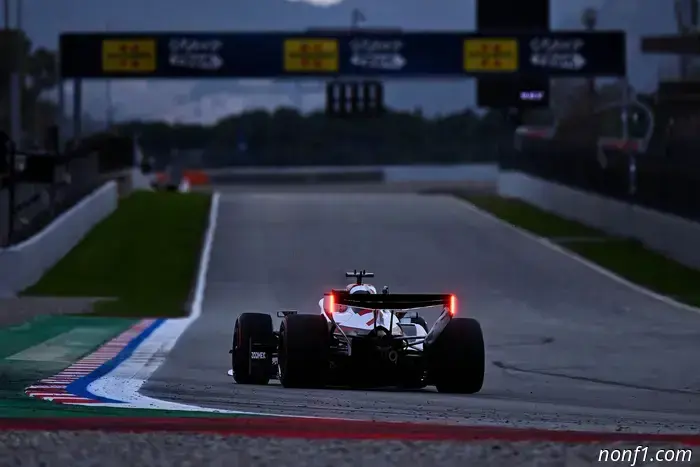
Ocon cautions against 'lift-and-coast' strategy in qualifying for '26.
"We make the most of the tools we're provided."
Esteban Ocon has recognized a common concern among fans regarding Formula 1’s significantly changed 2026 vehicles - that 'lift-and-coast' driving will not only be prevalent but also quite intense, even during qualifying sessions. The Haas driver has previously expressed skepticism about the new active aerodynamics, labeling it as simply "DRS at the front," and now acknowledges that the energy-management requirements of the new regulations are more demanding than anticipated.
"We have to employ lift-and-coast strategies during qualifying runs," Ocon disclosed. "It felt odd initially, but we had already practiced it in the simulator. After one lap, I got the hang of it. Now, it feels strange not to use it." He emphasized, "We utilize lift-and-coast so frequently that the driving style becomes second nature."
Veteran commentator Martin Brundle has defended the practice against criticism, pointing out that lift-and-coast has always been a part of Formula 1. However, Ocon admits that the extent of its use is unprecedented. "If you kept your foot on the accelerator, you’d need to hit the handbrake at the end of the straight," he explained. "With lift-and-coast, it’s manageable. It even feels quicker if you ease off earlier. It seems natural now because it’s the quickest method - but it’s entirely different from the usual way."
Mercedes team principal Toto Wolff also acknowledged how pronounced the impact appeared during the Barcelona shakedown, mentioning a significant difference in straight-line speed observed during practice. "George overtook Colapinto while he was on long runs," Wolff noted. "There was a 50 or 60 kilometre-per-hour difference along the straight."
Still, Wolff remains a steadfast supporter of the new regulations. "I see absolutely no downsides - and I’m not exaggerating," he asserted. "The cars are incredible. They look spectacular. They resemble Formula 1 cars again - not too small, not too big, unlike the whales of the past."
Ocon concurs that, at their core, the cars still embody the spirit of the category. "If you find faster cars in other series, let me know," he said. "As drivers, we optimize whatever tools we’re provided. If this is the quickest way, we will follow it. It’s still Formula 1."
However, the French driver also expressed worries that the 2026 regulations may not have resulted in easier racing. "I did a few laps behind other cars," he mentioned. "Following felt more challenging. There’s a noticeable balance shift compared to clear air - possibly even more pronounced than with the previous generation. Though it’s early days, that was my impression."
Ocon added that the new overtake mode, which offers a temporary power boost when within one second of another car, has yet to change the situation dramatically. "Currently, overtaking appears quite difficult," he said. "Even though the system is still being refined."
Teammate Oliver Bearman echoed this observation, noting increased instability in dirty air. "I could stay close to other cars for a few laps," the Briton shared. "It was tougher to follow, and the balance was affected more than with the current models. That’s critical in close racing."

Other articles
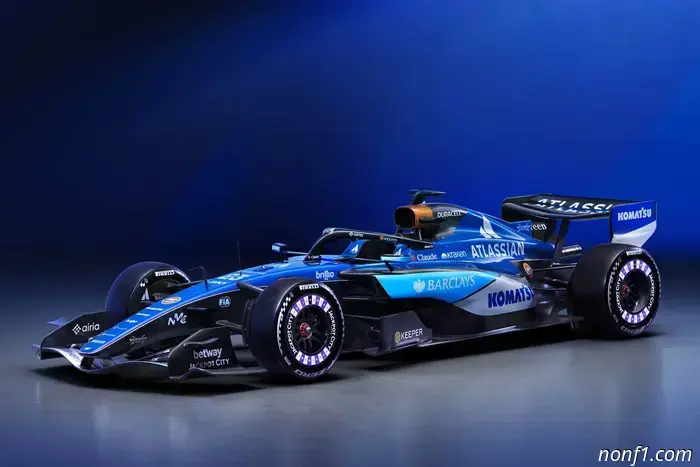 Williams skipped test to remain 'competitive' - Vowles
Formula 1 | Williams team principal James Vowles has justified the choice to skip the entire shakedown week in Barcelona, stating that postponing the FW48 was difficult but (…)
Williams skipped test to remain 'competitive' - Vowles
Formula 1 | Williams team principal James Vowles has justified the choice to skip the entire shakedown week in Barcelona, stating that postponing the FW48 was difficult but (…)
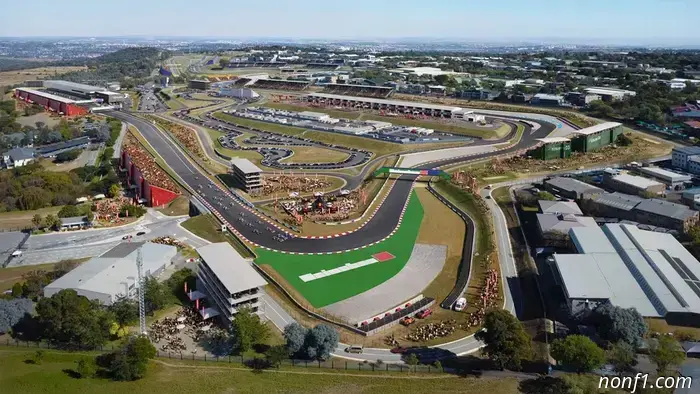 South Africa acknowledges that its return to Formula 1 is still several years off.
Formula 1 | South Africa's enduring efforts to bring Formula 1 back to the African continent have encountered a reality check, as noted by sports minister Gayton McKenzie (…)
South Africa acknowledges that its return to Formula 1 is still several years off.
Formula 1 | South Africa's enduring efforts to bring Formula 1 back to the African continent have encountered a reality check, as noted by sports minister Gayton McKenzie (…)
Ocon cautions against 'lift-and-coast' strategy in qualifying for '26.
Formula 1 | Esteban Ocon has recognized a major concern shared by numerous fans regarding the dramatically updated 2026 cars - that 'lift-and-coast' driving will not merely…